No WiFi, No Problem? How Teachers Adapt Fast
When the internet goes down, many teachers are left scrambling and losing control of the classroom. This post explains a simple system that keeps you prepared and in control no matter what happens.
5/13/2026
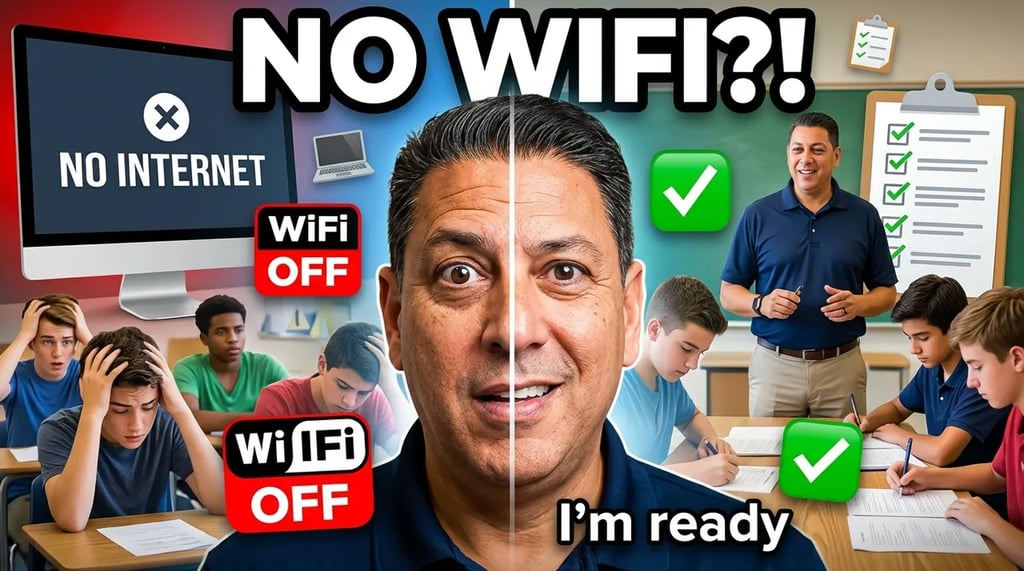
You walk into your classroom.
You turn on your computer, get everything ready, and you’re set to go.
And then… the internet is down.
That moment can instantly create panic, especially if your entire lesson depends on technology.
But here’s the truth:
It’s not the internet going down that causes the problem—it’s not having a plan when it does.
When technology fails, the structure of your class disappears if you’re not prepared. You lose your pacing, your transitions, and your direction. And students feel that immediately.
What usually follows is predictable:
💬 Students start talking
⏱️ Time begins slipping away
📉 Focus disappears
🔄 Momentum is lost
And before you know it, the class starts to unravel.
For newer teachers, this can feel overwhelming. It can quickly turn into one of those days you just want to survive.
But it doesn’t have to be that way.
When this happened in my classroom, I didn’t panic. I went straight to a system I had already prepared.
I opened my desk drawer, pulled out a backup plan, and got started within minutes.
📺 A video ready to go
📄 A worksheet to keep students focused
⏱️ A structure that bought me time
While students were engaged, I adjusted my lesson plan in the background.
Within about 15 minutes, I was completely back on track.
That’s the difference preparation makes.
So how do you build that kind of confidence?
It comes down to a simple three-step system.
First, you need to think in terms of bigger units. Planning in three-week chunks gives you direction. You don’t need every detail figured out, but you should know where you’re going.
📅 Map out the unit
🎯 Know your end goal
🔁 Understand how lessons connect
That way, if something changes, you can shift your plans without feeling lost.
Second, stay one week ahead. This is where real control comes from. When you already know what you’re teaching and your materials are ready, you’re not scrambling—you’re adjusting.
📋 Lessons are planned
📄 Materials are ready
⏳ Transitions are already thought through
That one-week buffer gives you breathing room when things don’t go as planned.
Third, and most important, have an emergency lesson ready to go. This should be something simple and effective that you can use immediately.
📺 A ready-to-play video
📄 A matching worksheet
📋 Clear, simple instructions
Nothing complicated—just something that keeps students engaged and buys you time to think.
What makes this system work is how these pieces connect.
🧠 Long-term plan → gives direction
📋 Weekly prep → gives control
🚨 Emergency plan → gives security
When all three are in place, unexpected situations stop feeling like emergencies.
At the end of the day, you can’t control everything. Technology will fail. Plans will change. Things will go wrong.
But you can control how prepared you are.
✔ Plan ahead
✔ Stay organized
✔ Have a backup ready
And when you do…
You don’t panic—you adapt.
If you want to watch the full video with more details, click here:
👉 https://www.youtube.com/watch?v=rVtcckNg1BE&list=UULFQOIbqNhb_gseSVU6bE3uUA