Notes Aren't Working? Try These 8 Teacher Hacks Before It's Too Late
Many students copy notes without truly understanding the material, leading to poor retention. This post shares practical strategies to make note-taking more engaging, meaningful, and effective.
5/9/2026
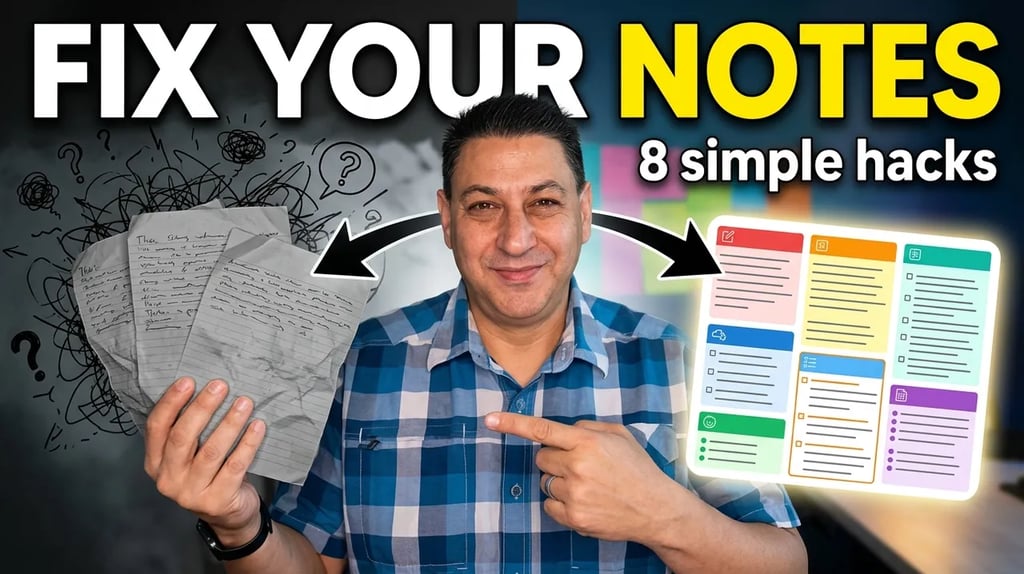
If your students are just copying notes without really thinking, you’re not alone.
It’s one of the most common problems in the classroom. Students write things down, but when it comes time to use that information, it’s not there. The issue isn’t note-taking itself—it’s how the notes are structured.
The goal is simple: move from passive copying to active thinking.
That’s where these strategies come in.
Over time, I’ve developed a system of eight things I build into my notes to take them from ordinary to effective. And once these pieces are in place, the difference in engagement and understanding is noticeable.
The most powerful strategy is what I call the big thinking question.
This is a question that connects the lesson to the student personally. It’s not about content at first—it’s about their opinion. That’s what makes it powerful.
When students answer a question based on their own thinking, they are immediately engaged. Then, as the lesson continues, you connect their answer back to the content.
This is what makes the learning stick.
Another key piece is immediate feedback.
At the end of the notes, students count their points and determine the grade they earned that day. This gives them instant feedback on their effort.
Without that, students often feel disconnected. They don’t know if their work mattered or if they did well. But when they can see the result right away, it creates a sense of accountability.
And more importantly, it reinforces effort. 💡
You also need to plan for flexibility.
Sometimes lessons run short. That’s why it’s important to build in something like a reading activity that connects to your notes. If you don’t use it, that’s fine. But if you need it, it’s ready.
This helps you stay “bell to bell” without scrambling for something to fill time.
Another important strategy is connecting your warm-up to your notes.
When students walk into class, they should have something to do right away. But that activity shouldn’t feel separate from the lesson. It should connect directly to what they are about to learn.
This allows you to reference it later and creates a smoother flow throughout the lesson.
Reflection is another key piece.
Students need time to process what they just wrote down. That’s where “ahas” come in. This is a space where students reflect on their notes—through a drawing, a question, or a statement.
Reflection turns information into understanding.
At the end of the lesson, students should also write a summary.
This pulls everything together. It gives them one last opportunity to organize their thinking and connect it back to the main idea.
That main idea is guided by the essential question.
The essential question focuses the lesson from the start. It tells students what they are working toward and helps them stay on track as they take notes.
Finally, presentation matters.
Using tools like Google Slides to improve the visual quality of your notes doesn’t change the content, but it does make it more engaging.
A clean, well-designed slide is easier to follow and more appealing to students. 🎨
When you combine all of these strategies, something changes.
Students are no longer just copying notes—they are thinking, reflecting, and connecting.
That’s what makes the difference.
Because in the end, notes only work when students are actively involved in the learning process.
If you want to watch the full video with more details, click here:
👉 https://www.youtube.com/watch?v=T0NuZZrpeRg&list=UULFQOIbqNhb_gseSVU6bE3uUA